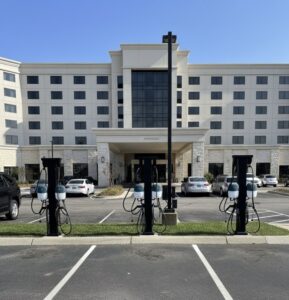

The rapid adoption of electric vehicles across North America has significantly increased the demand for fast, reliable charging infrastructure. Among all charging solutions, Level-3 (DC Fast) EV chargers play a critical role by enabling drivers to recharge their vehicles in minutes rather than hours. For commercial properties, fleet operators, and public charging networks, these high-power chargers are essential for supporting long-distance travel and high-traffic locations. As technology continues to evolve, 2026 brings more powerful, efficient, and network-ready DC fast charging solutions to the market. This article highlights the top 10 commercial Level-3 EV chargers in North America, selected based on performance, compatibility, reliability, and suitability for commercial use.
A Level-3 EV charger, commonly referred to as a DC Fast Charger, is the fastest type of electric vehicle charging technology currently available for public and commercial use. Unlike Level-1 and Level-2 chargers, which deliver alternating current (AC) to the vehicle and rely on the car’s onboard converter, Level-3 chargers supply direct current (DC) power directly to the battery. This allows for significantly higher power output and dramatically reduced charging times.
Most commercial DC fast chargers operate in the 50 kW to 350 kW range, depending on the model and installation. At these power levels, many modern electric vehicles can charge from 20% to 80% in as little as 15–40 minutes, making Level-3 chargers ideal for highway corridors, retail centers, fleet depots, and high-traffic public locations.
Level-3 chargers typically support industry-standard connectors such as CCS (Combined Charging System) and CHAdeMO, with growing adoption of NACS (North American Charging Standard) following recent industry shifts. This broad compatibility ensures that DC fast chargers can serve a wide range of EV models, from passenger cars to light-duty commercial vehicles.
Because of their high power demand, Level-3 chargers require robust electrical infrastructure, often including dedicated transformers, advanced energy management systems, and utility coordination. While installation costs are higher compared to Level-2 chargers, the ability to serve more vehicles in less time makes DC fast charging a strategic investment for commercial operators focused on scalability, efficiency, and future-proofing their EV infrastructure.
DC Fast Chargers (Level‑3) are critical for highways, fleets, and high-traffic retail locations where vehicles require rapid charging. They deliver high throughput and minimize downtime, making them essential for fleet operators and commercial properties with quick-turnover vehicles. Here’s a list of the top 10 commercial DC fast chargers in North America for 2026:
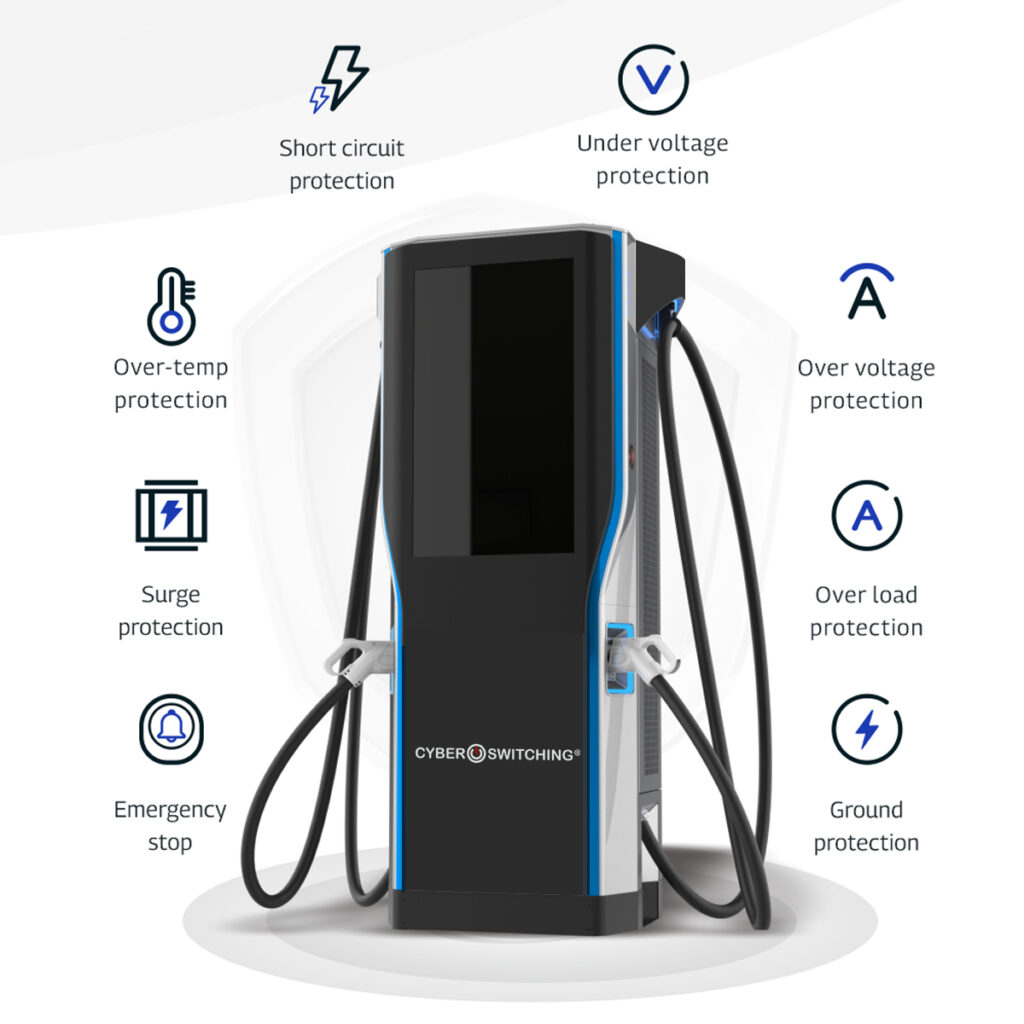
When it comes to Level‑3 (DC Fast) commercial EV chargers, each solution serves a distinct purpose for different site requirements. ABB, Power Electronics and Delta are proven, industrial-grade solutions with a global presence and high power output, making them ideal for demanding commercial and fleet deployments. CyberSwitching offers a simple, reliable DCFC solution that is easy to maintain, competitively priced, and provides high uptime for commercial sites. Meanwhile, Autel, ABB, and ChargePoint are higher-priced options that may suit premium deployments but come with a larger upfront investment.
Choosing the right DC Fast Charger depends on your site’s power needs, budget, and maintenance preferences. The right solution ensures efficient, reliable charging for your vehicles while supporting future EV demand.
Installing Level-3 (DC Fast) EV chargers offers significant advantages for businesses looking to stay competitive in a rapidly electrifying transportation landscape. One of the most immediate benefits is the ability to attract and retain customers. Fast charging reduces wait times, making commercial locations such as shopping centers, restaurants, hotels, and highway service areas more appealing to EV drivers who prioritize speed and convenience.
Level-3 chargers also create new revenue opportunities. Businesses can generate income through pay-per-use charging, subscription models, or partnerships with charging networks. In addition, faster turnover means more vehicles can be served per day compared to Level-2 chargers, maximizing return on investment and improving overall station utilization.
For fleet operators and logistics companies, DC fast charging enables higher vehicle availability and operational efficiency. Vehicles can be quickly recharged between routes or shifts, reducing downtime and supporting fleet electrification goals. This is particularly valuable for delivery services, rideshare operators, and municipal fleets.
Beyond financial benefits, Level-3 chargers enhance a company’s brand image and sustainability credentials. Offering fast EV charging demonstrates environmental responsibility and innovation, helping businesses align with corporate ESG initiatives and government sustainability programs. As EV adoption continues to grow, investing in DC fast charging infrastructure also helps future-proof commercial properties, ensuring they remain relevant and competitive in the evolving mobility ecosystem.
Looking ahead, DC fast charging is set to become an even more critical component of North America’s EV infrastructure. Ongoing advancements in charging technology are driving higher power outputs, improved efficiency, and smarter energy management, enabling faster and more reliable charging experiences. The industry is also moving toward greater standardization, with wider adoption of unified connector standards and improved cross-network compatibility.
At the same time, integration with renewable energy sources, battery storage systems, and smart grids is expected to reduce strain on electrical infrastructure while lowering operating costs for commercial sites. As electric vehicle adoption accelerates beyond 2026, businesses that invest early in scalable, future-ready DC fast charging solutions will be better positioned to meet growing demand, support sustainability goals, and remain competitive in an increasingly electrified transportation ecosystem.