Home / Commercial EV Charging Station / Fleet EV Charging Solutions
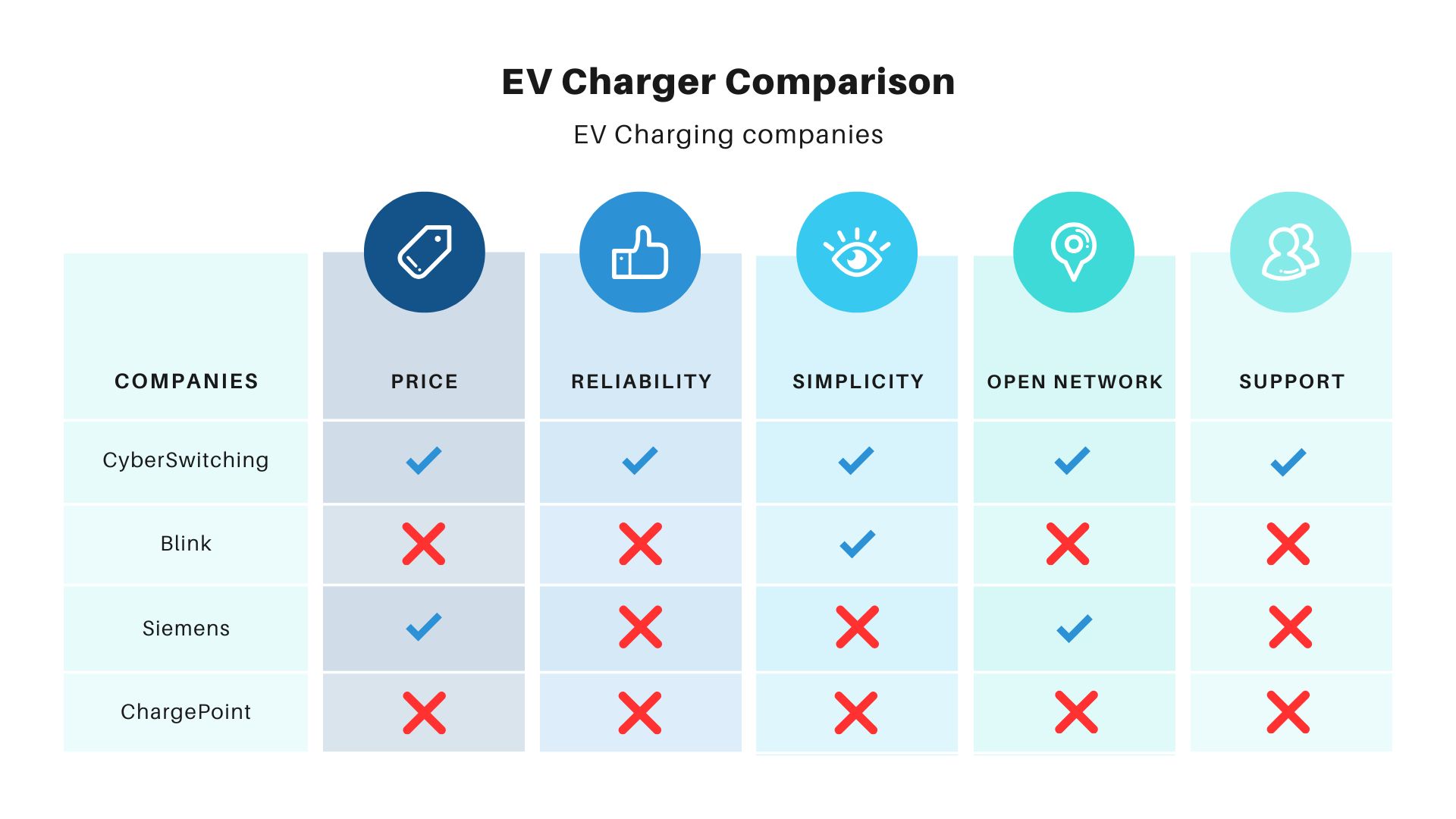
EV Charging station companies comparison
Top Rated EV Charging stations for Fleets
$3,890.00 Original price was: $3,890.00.$3,550.00Current price is: $3,550.00.
$3,290.00 – $3,990.00Price range: $3,290.00 through $3,990.00
$2,890.00 Original price was: $2,890.00.$2,790.00Current price is: $2,790.00.
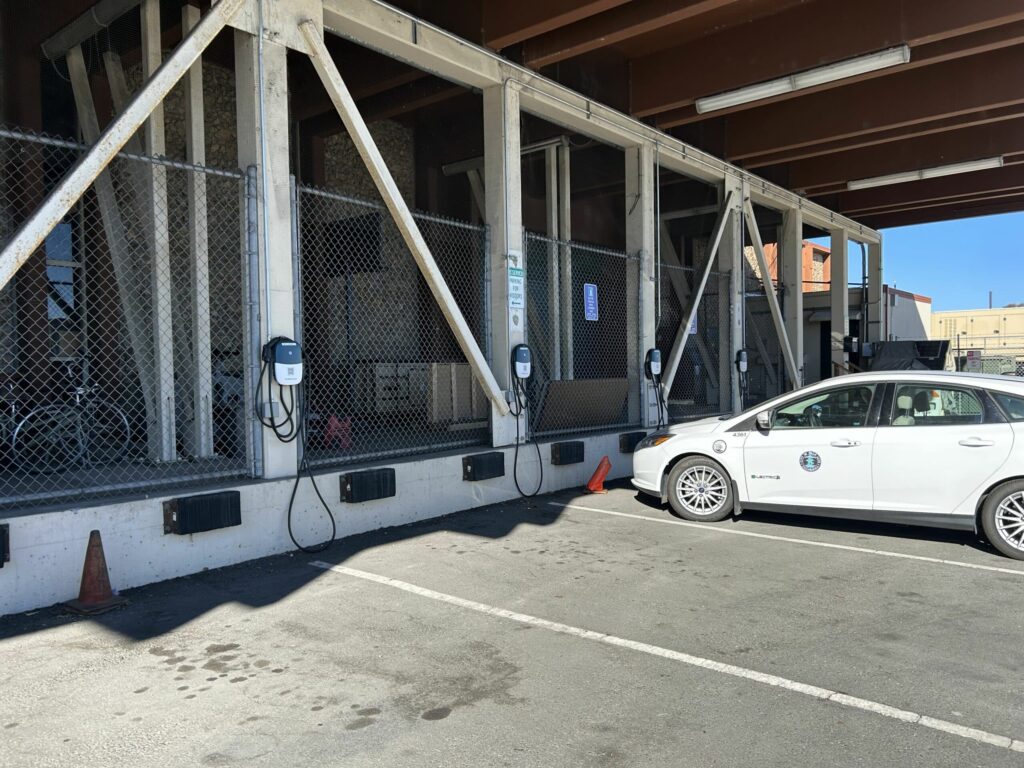
Cyber Switching supports fleet operators with scalable EV charging infrastructure designed for commercial deployment. Our charging systems can be used as part of a turnkey charging installation for fleet depots, commercial facilities, and government transportation fleets.
Fleet charging infrastructure typically includes:
This approach enables fleet operators to deploy EV charging stations quickly while maintaining reliable fleet operations.
As fleet operators navigate the evolving transportation landscape, the demand for electric vehicle (EV) charging stations continues to surge. The increasing adoption of electric fleets—driven by environmental concerns and the cost-effectiveness of EVs—highlights the critical importance of reliable charging infrastructure.
For fleet operators, investing in EV charging stations is essential to:
Modern EV charging stations equipped with intelligent technology provide valuable data that helps optimize fleet operations. This data enables fleet management systems to:
The integration of charging infrastructure with fleet management systems offers centralized monitoring and control. This allows operators to:
As a result, fleet operations become more streamlined, efficient, and cost-effective.
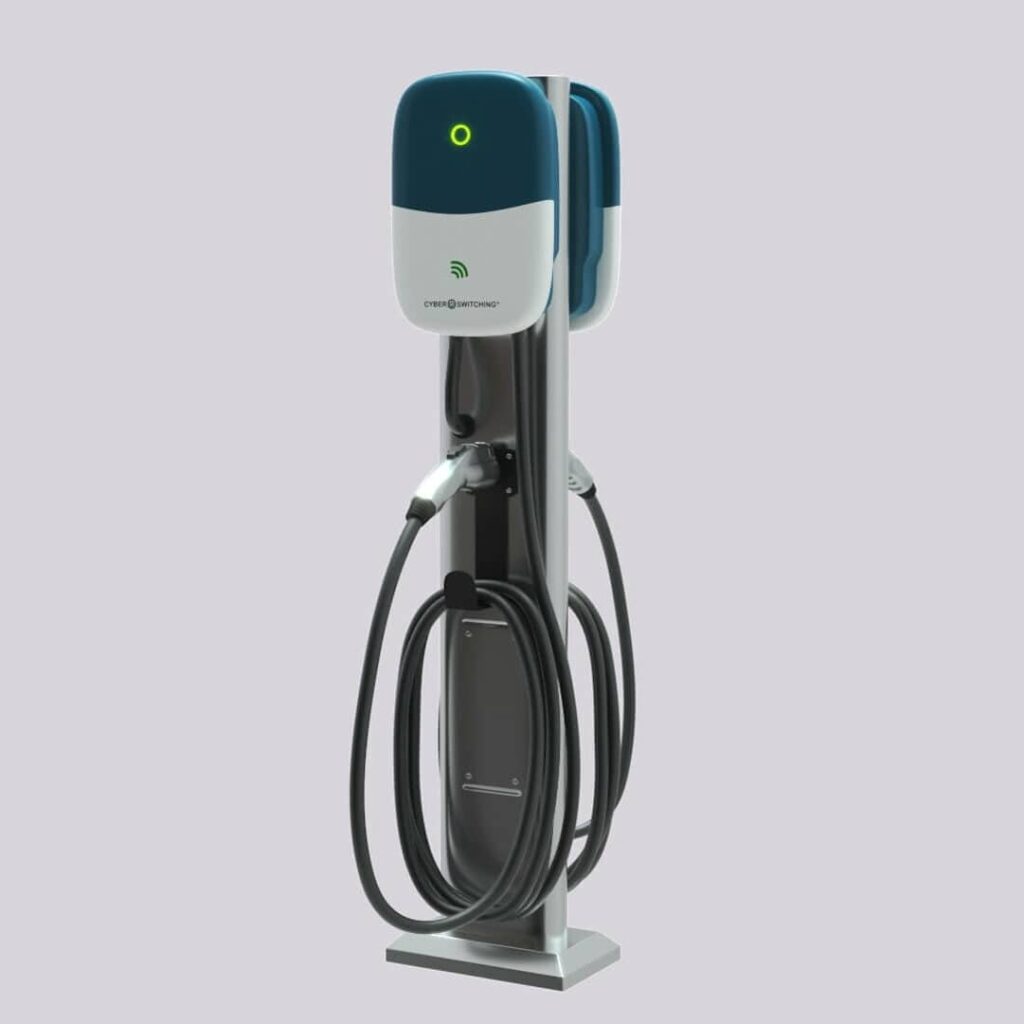
The Cyber Switching CSE1 is designed to meet the specific needs of fleet operators transitioning to electric mobility. It seamlessly integrates with modern EVs, providing a dependable and efficient charging solution.
Key advantages of the CSE1 and CSE4 include:
With these features, the CSE1 empowers fleet operators to optimize charging processes, reduce inefficiencies, and maintain full control over their electric fleet infrastructure.
One of the important benefits of EV fleet charging is to maximize savings and reduce operational costs. This can be done thanks to lower electricity prices than gasoline ones. This allows predictability, which is very complicated for gasoline since it is linked to geopolitical conflicts. Utilities have also enabled special TOU tariffs that can be used for fleet EV charging at lower electricity rates.
Given that electric vehicles have less moving parts and are less complex than gasoline ones, EVs will have lower maintenance requirements than gasoline ones. This maximizes operational time for the fleets as vehicles will not constantly be out of operation due to multiple repairs. Likewise, safety parameters for electric vehicles and gasoline ones are very similar.
Electric vehicles are incredibly powerful and efficient machines. While charging an electric fleet will give you an impressive 85-90% efficiency, an ICE fleet will only be about 20% efficient. This means an electric vehicle uses almost to the fullest all the potential energy that is provided to it. Additionally, thanks to V2X technology, electric cars can be ingeniously used as a source of power as well.
City of
Seattle
City of
San Francisco
City of
Palo Alto
City of
San Ramon
Service By
Medallion
Selecting the right EV charging station for fleets involves careful consideration of several key factors to ensure an efficient and future-proof charging infrastructure. Here are essential considerations for fleet operators:
By carefully considering these factors, fleet operators can make informed decisions when selecting EV charging stations, ensuring they meet the current and future needs of their electric vehicle fleets while maximizing operational efficiency.
All that the Cyber Switching EV charging station needs is to have a direct connection to your local single-phase electricity supply at 240VAC through a circuit branch. Properly sized cables and an external OCPD will be required as per electrical code to connect the CSE1 to your main or sub electrical panel.
Totally! LED status lights in the front of the EV charger show you whether the CSE1 is in standby mode, charging or waiting to start charging.
Blue Light: Standby
Constant Green Light: Waiting to charge after EV is connected.
Flashing Green Light: Charging
The higher the power rating of the EV charging station, the faster your EV will be completely charged. Depending on your need for charging speed, you will have to choose between 3.5kW, 7kW, 10kW or 11.5kW. To find out how many hours on average it would take to charge your EV fleet, search for the battery capacity of your electric vehicle and divide it by the power rating of the CSE1.
Yes, both the CSE1 and CSE2 charging station are ETL-listed equipments with a Type 3 enclosure that is rated to work indoors or outdoors. This means they’re rated to prevent dirt and dust from entering inside the equipment and is also protected against rain, snow, or sleet.
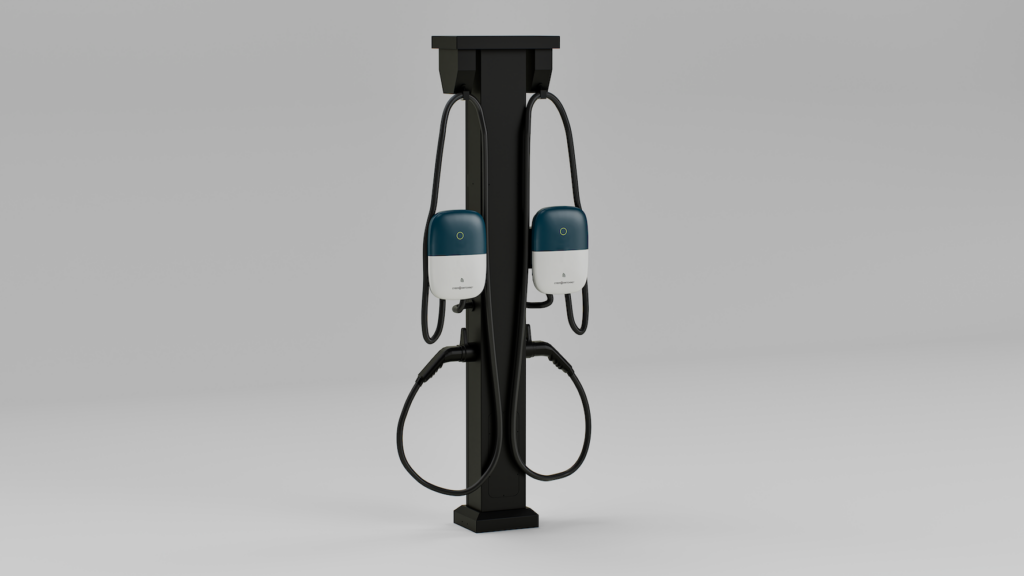
Both CSE1 and CSE2 EV charging stations could be mounted on the wall, on a standard pedestal as well as on the pedestals with cable management
CNET
TechCrunch
Nasdaq
TechTimes
IBT
Yahoo
Torque
Hackernoon
Email: info@cyberswitching.com
Phone: 1.408.436.9830
Having trouble? Find the answer to your query here. Don’t hesitate to contact us!
Follow our latest news and thoughts which focuses exclusively on Power Management and EV Charging