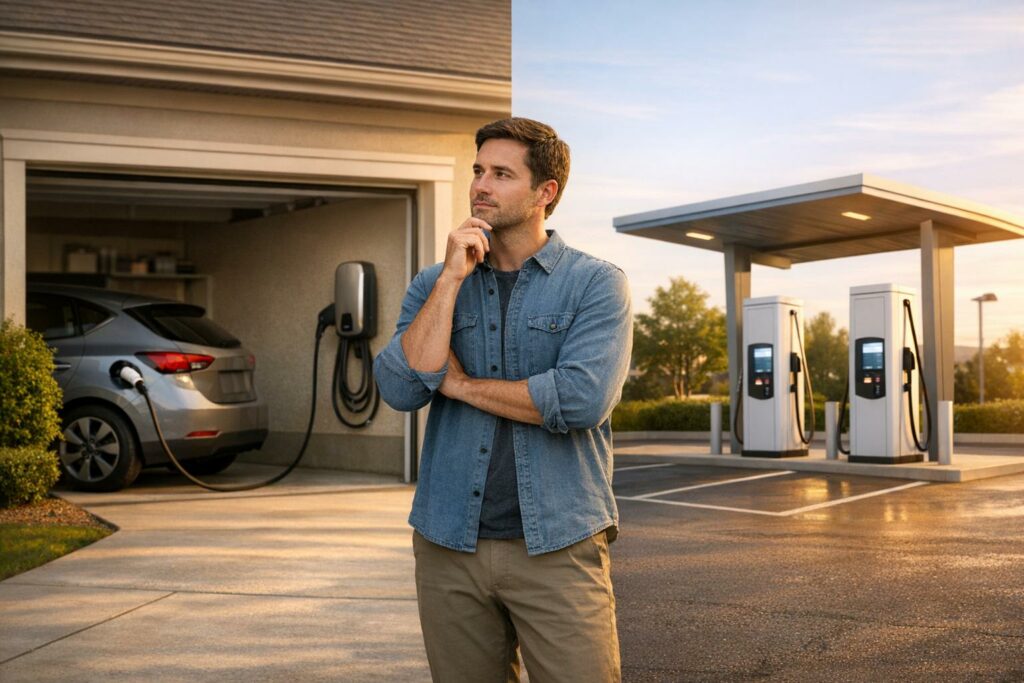
The automotive industry is rapidly evolving as electric vehicles become a practical alternative to traditional gas-powered cars. Rising fuel costs, environmental concerns, and advances in battery technology are encouraging drivers and businesses to reconsider long-established transportation choices. As a result, many people are asking which is better electric or gas cars in real-world conditions. To […]
The rapid adoption of electric vehicles across North America has significantly increased the demand for fast, reliable charging infrastructure. Among all charging solutions, Level-3 (DC Fast) EV chargers play a critical role by enabling drivers to recharge their vehicles in minutes rather than hours. For commercial properties, fleet operators, and public charging networks, these high-power […]
EV charging stations increase foot traffic and direct revenue, boost property values, lower energy costs with smart load management, and qualify for federal tax credits.
Match charging speed, ensure protocol and vehicle compatibility, plan scalability, manage costs, and use smart power monitoring for reliable EV charging.
Fix five common fleet EV charging issues—too few stations, power/load spikes, poor scheduling, high costs, and limited scalability—with practical tech solutions.
Commercial EV chargers cut operating costs by lowering fuel and maintenance expenses, using smart charging and load management, and tapping incentives.