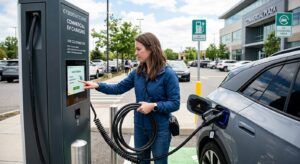
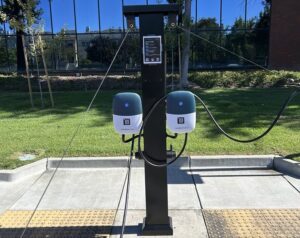
Commercial EV chargers are charging systems installed for use by customers, employees, visitors, tenants, or fleet drivers. They can be found at workplaces, hotels, retail locations, parking facilities, and other shared properties. Unlike a home charger, a commercial unit may serve many different drivers and can include payment or access controls.
The equipment varies in charging power and interface. Some units provide slower AC charging suitable for longer stays, while others offer much faster DC charging for drivers who need to continue their journey quickly. The available charging speed depends on the charger, vehicle, and electrical system.
Commercial units may also differ in how users start and pay for a session. Depending on the location, drivers may use a card, an app, an RFID device, or a built-in payment terminal. The charger’s display typically provides instructions and shows important information during use.
Understanding these differences makes it easier to follow commercial EV charger instructions and avoid problems when starting a charge. If you are learning how to use public charging stations, the same basic principles apply: check compatibility, follow the charger’s instructions, authorize the session, and connect the vehicle correctly.
What to Check Before Starting a Charging Session
Before connecting your vehicle, take a moment to check that the charger and your car are ready to use. This can prevent connection errors and help you choose the right charging option.
Check the following:
Make sure the plug is compatible with your vehicle and inspect it for visible damage.
If the cable is attached to the unit, check that it can reach your vehicle without being stretched or creating an obstruction.
Confirm that the unit is available and not displaying an error message.
Check whether the charger requires an app, payment card, RFID card, or another form of access.
Park close enough to the unit for convenient connection while keeping the vehicle within the marked space.
If you are unsure how to use a charging station, look at the instructions displayed on the unit before plugging in. Some commercial chargers use a touchscreen, while others have physical controls or rely primarily on a mobile app. Taking these few steps first can make the charging process smoother and reduce the chance of having to restart the session.
How to Use a Commercial EV Charger Step by Step
Once the vehicle is correctly parked and the charger is available, the process is usually straightforward. If you are learning how to use a public EV charging station, the same basic sequence applies to most commercial units, although the interface and payment options may vary.
The basic EV charging steps are:
Connect the vehicle. Plug the cable securely into the vehicle’s charging port and the charger if the cable is separate.
Authorize the session. Follow the charger’s instructions to start access or payment.
Start charging. Use the start control or follow the instructions on the unit or app.
Confirm the connection. Check that the charger indicates that power is being delivered.
Monitor the session. The display or app may show the battery level, charging progress, and estimated charging time.
Once charging begins, avoid moving the vehicle or disconnecting the cable unless you first stop the session. The charging status can usually be checked directly on the charger or through the associated app.
If the charger does not begin charging after connection, check the displayed instructions before trying to reconnect. A failed authorization, loose connection, or incompatible equipment can prevent the session from starting.
Paying for Commercial EV Charging
Commercial charging stations can use different payment and access methods, so it is worth checking the available options before starting. Some locations require payment for every use, while workplace, hotel, or customer chargers may be free for eligible users.
Common payment and access options include:
Mobile app: Select the charging point, authorize the session, and manage payment through the operator’s application.
RFID card or key fob: A charging network may link access to a registered account.
Payment terminal: Certain stations provide an integrated terminal for card payments.
The price may be based on energy consumption, charging time, or a combination of fees. Depending on the operator, additional idle fees may apply if the vehicle remains connected after charging has finished.
Before starting, check the displayed price and payment terms. After the session ends, some systems provide a digital receipt through the app or by email, while others display transaction details directly on the charger.
How to Finish and Disconnect From the Charger?
When your vehicle has received enough power, finish the charging session before disconnecting the cable. The exact procedure depends on the charger, but it is usually simple.
Check the charging screen or vehicle display to confirm the session is complete or has reached the desired state of charge.
Use the charger’s stop control or the connected app to end charging.
Wait for the connector to unlock. Some vehicles require you to unlock the car before the plug can be removed.
Disconnect the cable from the vehicle and return it to the charger if it is attached to the unit.
Make sure the charging point is ready for the next driver and move the vehicle when appropriate.
Do not force the connector out while power is still being supplied. If it remains locked after the session has ended, follow the vehicle or charger’s release instructions rather than pulling on the cable. Finishing promptly is also important at busy locations where other drivers may be waiting for access.
Common Commercial EV Charging Problems
Even when the basic process is straightforward, a charger may occasionally fail to start or stop as expected. The first step is to check the message or error code shown by the unit and follow the operator’s instructions.
Problem
Possible cause
What to do
Charging does not start
Connection or access issue
Check the plug and authorization details
Vehicle is not recognized
Connector is not fully inserted
Disconnect and reconnect it securely
Charging stops unexpectedly
Charger or vehicle error
Check the display for an error message
Charger is unavailable
Station is occupied or offline
Try another available unit
If the problem continues, avoid repeatedly reconnecting the vehicle or attempting to override an error. Instead, check the charging network app or contact the operator using the support information shown on the unit.
Drivers should also remember that not every problem originates with the charger. A vehicle’s own settings, battery condition, or charging limitations can affect the result. Checking both the car and the charger can help identify the source more quickly.
Tips for Using Commercial EV Chargers Efficiently
A few simple habits can make commercial charging more convenient and help you get the most from each charging session. Before connecting, check the vehicle’s recommended charging limits and select an appropriate charger for how long you plan to stay.
Keep these tips in mind:
Choose a charger that matches your required charging speed and expected charging time.
Check your vehicle’s battery level before starting so you can estimate how much energy you actually need.
Monitor the session rather than leaving the vehicle connected unnecessarily.
Follow the site’s parking and charging rules, especially at busy locations.
Keep the connector and cable off the ground where possible and return them properly after use.
If you regularly charge away from home, save your preferred charging network and payment details for quicker access.
Using suitable EV charging equipment can also make the experience more predictable, particularly when charging at workplaces, hotels, or other facilities with multiple users. Efficient charging is not necessarily about reaching 100% every time; for many trips, adding only the energy needed for the next part of the journey is more practical.
Commercial EV Charging for Businesses and Shared Facilities
Commercial charging is useful for businesses and shared facilities that want to provide convenient charging for employees, customers, guests, or visitors. The experience can vary depending on how the site manages access, payment, and charger availability.
A business may offer charging as a complimentary amenity or charge users based on the amount of electricity consumed. In the latter case, drivers may see the cost calculated by kilowatt-hours or according to another pricing model set by the operator. Some facilities also require users to create an account before they can access the equipment.
For properties serving multiple users, a dedicated EV charging station can help organize access and provide a consistent charging experience. Commercial charging solutions, such as those offered by CyberSwitching, can be adapted to different business and shared-facility needs.
FAQ
How do I know which charging station is right for my EV?
Check the connector type supported by your vehicle and compare it with the options available at the charging point. Your vehicle manual or manufacturer’s specifications can confirm compatibility. Charging power should also match your needs and the vehicle’s capabilities.
Can I use a commercial charger without downloading an app?
Yes, depending on the operator. Some stations allow contactless payment or another authorization method without requiring an app. Others may require registration through a specific charging network before you can start.
What should I do if the charger does not start?
First, make sure the connector is fully inserted and that the charging cable is properly connected. Check the display for an error message and confirm that the session has been authorized. If the problem continues, use the operator’s support contact rather than attempting to repair the equipment yourself.
How long should I stay at a commercial charging station?
Stay only as long as needed for your trip. Charging time depends on the vehicle, charger power, battery level, and desired charge level. At busy locations, moving the vehicle once charging is complete helps keep the space available for other drivers.
Is it safe to leave an EV charging unattended?
In most cases, EVs can be left charging while the driver is away, provided the charging station and vehicle are operating normally. However, drivers should follow the site’s rules and remain aware of any time limits or idle fees. For unattended charging, it is useful to monitor the session through the vehicle or charging network app when this option is available.