
Home / EV Charging News / Long-Term Cost Comparison of EV Charging: Home Charging vs. Public Charging
Owning an electric vehicle is often associated with lower fuel and maintenance expenses, but energy costs can vary significantly depending on where you recharge. While home charging is generally considered the more economical option, public charging offers convenience that may outweigh the additional expense for some drivers.
Understanding the long-term financial impact of each charging method helps EV owners make smarter decisions about equipment, charging habits, and overall operating costs. Companies like CyberSwitching provide advanced EV charging solutions that support efficient and scalable charging for residential and commercial applications.
The choice between home and public charging depends on several factors, including electricity rates, driving distance, charging frequency, and access to charging infrastructure.
Home charging typically offers lower electricity prices and greater flexibility, especially when replenishing the battery overnight during off-peak hours. Public charging, particularly DC fast charging, provides speed and convenience but usually comes at a premium.
Quick Comparison
| Factor | Home Charging | Public Charging |
|---|---|---|
| Electricity cost | Lower residential rates | Higher commercial rates |
| Upfront investment | Home charger installation | None |
| Charging speed | Moderate (Level 2) | Fast (DC Fast Charging available) |
| Convenience | Charge overnight at home | Ideal during travel |
| Long-term savings | Higher | Lower |
| Best for | Daily commuting | Long-distance travel |
The answer depends on your electricity price, vehicle efficiency, battery size, and charging location.
For example, if your EV has a 75 kWh battery:
Although many drivers rarely charge from 0% to 100%, these figures illustrate how your energy source affects long-term ownership costs.
Installing a home charger requires an upfront investment, but the savings often outweigh the installation expense over time.
Typical expenses include:
Many homeowners recover the installation cost within several years because residential electricity rates remain substantially lower than public charging prices.
For drivers considering long-term ownership, selecting reliable EV charging equipment is an important part of maximizing efficiency and minimizing operating costs.
Public EV stations use several pricing models, including:
Fast-charge networks generally command the highest rates because they deliver significantly more power within a shorter period.
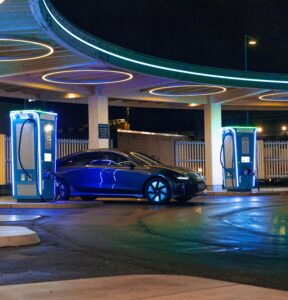
Public charging remains essential for:
However, relying exclusively on public charging can noticeably increase annual transportation expenses.
The following example illustrates estimated annual energy expenses for a driver traveling approximately 15,000 miles per year.
| Charging Method | Estimated Annual Cost | Estimated Five-Year Cost |
|---|---|---|
| Home charging | $650–$900 | $3,250–$4,500 |
| Public Level 2 charging | $1,150–$1,600 | $5,750–$8,000 |
| Mostly DC Fast Charging | $1,700–$2,400 | $8,500–$12,000 |
Actual costs vary depending on electricity prices, vehicle efficiency, charging habits, and local utility rates.
Several variables affect how much homeowners spend on charging:
Using electricity during off-peak hours can significantly reduce electricity costs in regions offering time-based utility rates.
Public pricing varies considerably by location and network.
Common factors affecting pricing include:
In many metropolitan areas, DC fast charging costs two to four times more per kilowatt-hour than residential electricity.
Over several years, the difference between home and public charging becomes increasingly significant.
Home power supply provides:
Public networks provide:
Drivers who combine both methods often achieve the best balance between convenience and affordability.
Reducing long-term charging expenses involves more than choosing where to charge. Intelligent energy management helps optimize electricity usage, balance electrical loads, and improve overall system efficiency without requiring expensive electrical upgrades.
Solutions such as the EV Management Controller (EVMC) allow multiple EV units to share available electrical capacity more efficiently. This approach can lower installation costs, reduce peak demand, and improve energy utilization in commercial buildings, multifamily properties, and workplace EV infrastructure.
Absolutely.
Although installing home EV equipment requires an initial investment, most EV owners benefit from lower operating expenses over the life of the vehicle. Public stations remain an essential part of the EV ecosystem, especially for long-distance travel and drivers without dedicated parking, but relying on it exclusively usually results in higher overall charging costs.
Evaluating your driving habits, electricity rates, and charging availability will help determine the most cost-effective strategy for your specific needs.
Yes. A larger battery needs more electricity for a full refill, so the total expense is usually higher at the same utility rate.
No. Each provider sets its own rates based on location, power level, membership plan, and time of use.
Yes. Extremely hot or cold temperatures may reduce battery efficiency, causing the vehicle to consume more energy and slightly increasing charging expenses.
For most modern EVs, regular partial top-ups are preferable. Following the manufacturer’s recommended battery range can support long-term battery health.
Often, yes. Employers may offer discounted or complimentary access, making workplace facilities more economical than commercial DC fast stations.